
Blog · Septic Pumping
What a septic tank actually means for a home you're about to buy
Published March 10, 2022 · Updated September 20, 2026 · By the Atteberry Industries crew, Show Low, AZ
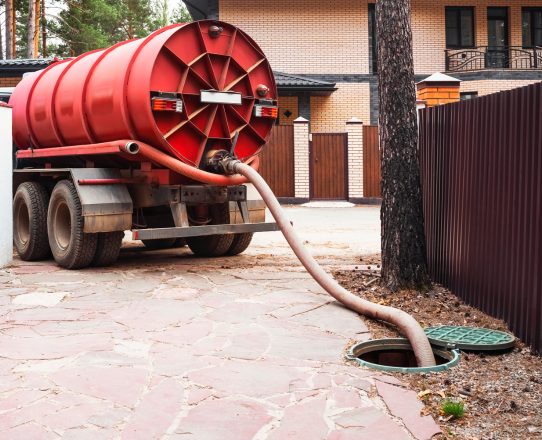
Short answer: A home on septic usually means lower monthly utility costs, no dependence on a municipal sewer system, and often a larger rural lot — but it also means the buyer inherits whatever maintenance history came before them. A septic system that's been pumped and inspected on schedule is an asset; one that hasn't is a liability that shows up after closing.
Why does a septic home tend to cost less to run?
There's no monthly sewer bill, and depending on the well setup, sometimes no city water bill either. In exchange, the owner budgets for pumping every 3-5 years (as of 2026, typical range $350-$650 for a standard residential tank, more for larger households or longer haul distances out toward Vernon or Concho) rather than paying a utility every month.
Over a 10-15 year ownership window, that math often favors septic, especially on properties with lower-than-average water use. It flips the other direction fast if a system gets neglected and needs a drainfield replacement, which can run into five figures.
Do septic properties really come with bigger lots?
Usually, yes. A functioning septic system needs room for a drainfield, plus setback distance from wells, property lines and structures, which naturally pushes septic development toward larger parcels. Across Snowflake, Taylor and the rural stretches around Linden and Vernon, that translates to more usable acreage, more room for outbuildings, and fewer shared walls with neighbors than you'd typically find on a municipal sewer lot in a denser subdivision.
What should a buyer actually inspect before closing?
Get the tank pumped and physically inspected, not just a visual walk-around, before the sale closes. A qualified inspector should locate the tank and drainfield, check baffles and the outlet filter if one exists, and assess whether the drainfield is accepting water normally or showing signs of saturation and failure.
Ask the seller for pumping records. A system with a paper trail of regular service every 3-5 years is a much safer bet than one with no history at all, even if both look fine on the surface — problems inside a tank aren't visible from the yard.
What are the real trade-offs of owning septic?
The honest downside is that septic puts more responsibility on the owner. There's no utility crew handling problems off-site — a backup, an overloaded drainfield, or a collapsed baffle is the homeowner's cost and the homeowner's schedule to fix. Systems also have real capacity limits; a big holiday gathering or a long-term house guest can push water use past what an older, smaller tank was designed for.
None of that makes septic a bad choice. It makes it a system that rewards attention. Buyers who go in knowing the maintenance rhythm — pumping on schedule, avoiding grease and wipes down the drain, keeping heavy vehicles off the drainfield — tend to have few surprises.
How does the monthly cost actually compare to a home on sewer?
A sewer bill is a fixed monthly line item, usually somewhere in the $40-$90 range depending on the municipality and household size; a septic system has no monthly charge at all, only a periodic pumping cost every 3-5 years. Averaged out over a year, a well-maintained residential septic system in the White Mountains often works out to less than $15-$20 a month in amortized service cost, which undercuts most sewer bills even before factoring in the water savings that come with a private well.
The comparison changes if a system needs emergency work. A surprise drainfield rebuild or a collapsed line can wipe out several years of savings in a single job, which is exactly why buyers should weigh purchase price against maintenance history rather than assuming septic is automatically cheaper in every scenario. A home with a documented, on-schedule pumping record is the version of septic that actually delivers the cost advantage.
Does septic complicate resale or financing?
Most conventional and FHA loans allow septic systems without issue, but lenders and appraisers do pay attention to system condition, and some loan programs require a septic inspection as a condition of closing, similar to a well-water test. A system with pumping records and a passed inspection moves through underwriting the same as any other home feature; one with no history or visible surface problems can slow down or complicate the loan.
On the resale side, sellers who keep pumping receipts and a copy of any inspection reports give their own future buyer the same confidence they'd want to see themselves. That paperwork is a small thing to keep in a drawer for years, but it's often the difference between a smooth closing and a buyer asking for a price reduction to cover an unknown.
How much do a household's water habits matter?
A lot — septic systems are sized to a specific daily wastewater load, and habits that spike water use faster than the drainfield can absorb it are the most common cause of early failure. Running multiple loads of laundry back-to-back, long showers for a large household, or a garbage disposal used heavily all add stress that a municipal sewer system simply absorbs without consequence.
Buyers moving from a sewer-connected home to septic sometimes need a short adjustment period: spacing out laundry, skipping the disposal for anything beyond light scraps, and avoiding flushing wipes or grease, even products labeled flushable. None of this is complicated, but it's a mindset shift worth knowing about before move-in day rather than learning it from a backed-up drain.
What should a new septic homeowner do in the first 90 days?
- Locate the tank and drainfield on the property and keep a note of GPS coordinates or landmarks for future service calls
- Request or confirm pumping records from the seller, and if none exist, schedule a baseline pump-out and inspection
- Have the tank's outlet filter (if equipped) checked and cleaned so the baseline condition is known going forward
- Mark the drainfield area so landscaping, parking or new construction doesn't compress the soil or damage lines
- Set a calendar reminder for the next pumping cycle, typically 3-5 years out depending on household size and tank capacity
Questions people ask us on the phone
Should I get a septic inspection before making an offer?
How long does a septic tank typically last?
Does a septic system affect home resale value?
Can I add a bedroom or bathroom to a septic home?
Is well water usually paired with septic in this area?
Will a lender require a septic inspection to close?
Do I need to change my water habits after buying a septic home?
Related reading: septic pumping · septic repair · Snowflake · Taylor · Vernon
Need this handled instead of read about? See Septic Pumping or call (928) 242-2802.