
Septic services
Septic tank cleaning: the full clean-out, not just the liquid off the top
Short answer: cleaning means removing the sludge layer on the bottom and the scum layer on top, not just drawing off the easy liquid in the middle. Atteberry cleans tanks down to the walls, checks the baffles while the tank is open, and hauls the waste to a permitted disposal site. Call (928) 242-2802.
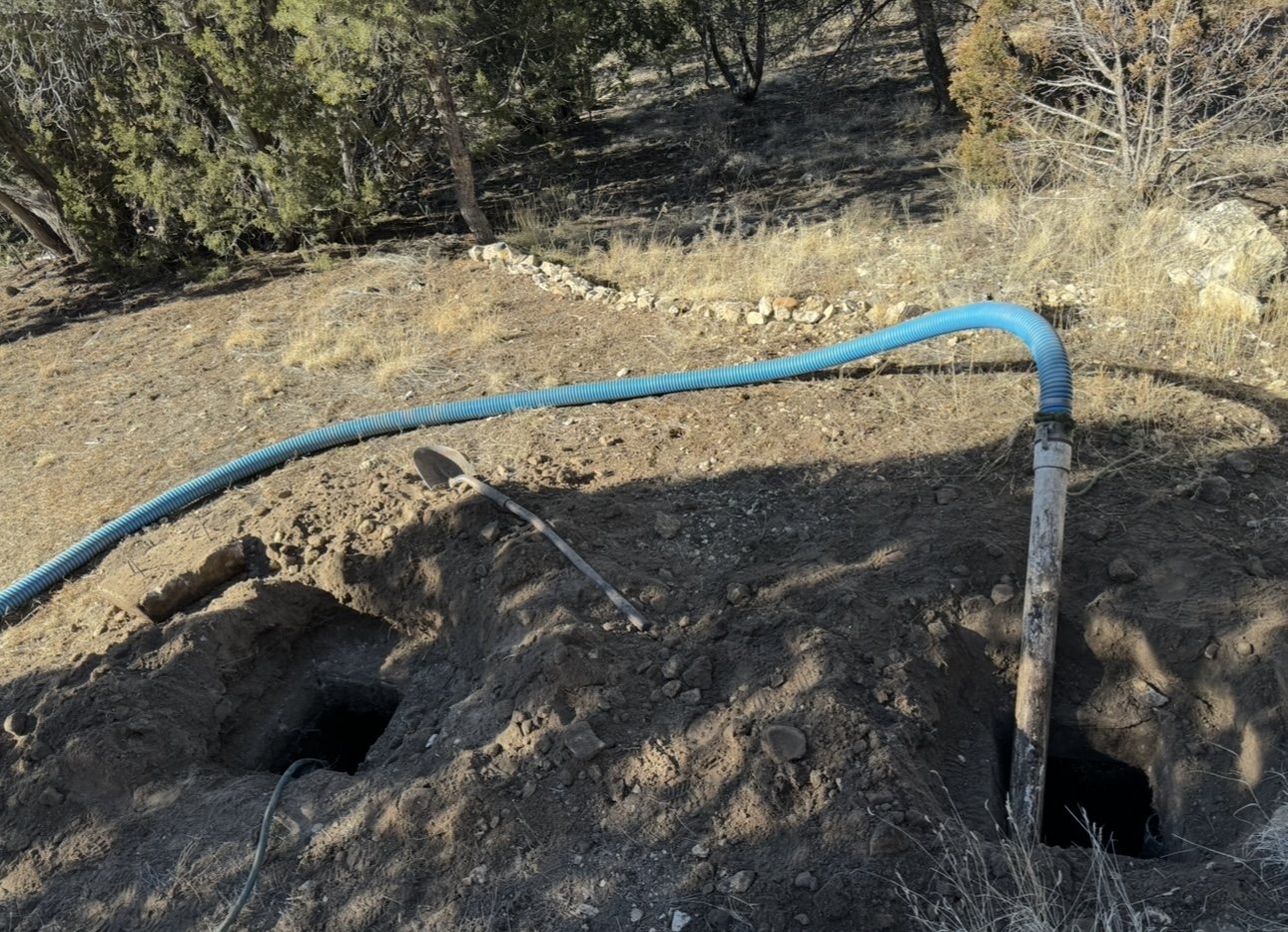
Cleaning versus pumping
People use the two words interchangeably, and in our shop they usually mean the same visit. The distinction that matters is how thorough the job is. A quick pump that pulls liquid and leaves the compacted sludge on the tank floor gets you back on the schedule within a year. A proper clean-out breaks up and removes the settled solids, backflushes as needed, and leaves the tank ready to work the way it was designed to.
That difference is invisible from the driveway, which is why we tell you what came out and what the tank looked like when we were done.
Signs your tank needs cleaning now
- Slow drains across the whole house, not just one fixture
- Gurgling from toilets or tubs when another fixture drains
- Sewage odor near the tank, the lid or the drainfield
- Water pooling or grass growing unusually fast over the field
- Sewage backing up into the lowest drain in the house
What we check while the tank is open
An open, empty tank is the only honest look you get at the system, so we use it. We check the inlet and outlet baffles, the condition of the concrete, the lid and risers, and whether roots have found the inlet line. On properties where the field sits uphill of the tank, we check the effluent pump and floats at the same time.
If something is wrong we tell you then, with the tank open, rather than scheduling a second visit to find out.
Where the waste goes
Everything we pump is hauled and disposed of at a permitted facility under Arizona rules. Ask any septic company where the load ends up — it is a fair question and the answer should be immediate.
Where we provide this service
- Show Low, AZ
- Pinetop-Lakeside, AZ
- Snowflake, AZ
- Taylor, AZ
- Heber-Overgaard, AZ
- Holbrook, AZ
- White Mountain Lake, AZ
- Linden, AZ
- Vernon, AZ
- Concho, AZ
- St. Johns, AZ
- Springerville, AZ
- Eagar, AZ
- Pinedale, AZ
- Clay Springs, AZ
- Whiteriver, AZ
Septic tank cleaning questions
How often should a septic tank be cleaned in Arizona?
How long does the job take?
Do I need to be home?
Do additives mean I can skip cleaning?
Can you clean a commercial septic tank?
Related: septic pumping · septic inspections · commercial septic