
Septic services
Septic tank pumping across Show Low and the White Mountains
Short answer: most homes in this region need the tank pumped every three to five years, and Atteberry pumps residential, rental and commercial tanks throughout Navajo and Apache counties. We locate buried lids, run long hose on properties trucks can't reach, and haul to permitted disposal. Call (928) 242-2802 for a price on your address.
What a pumping visit actually involves
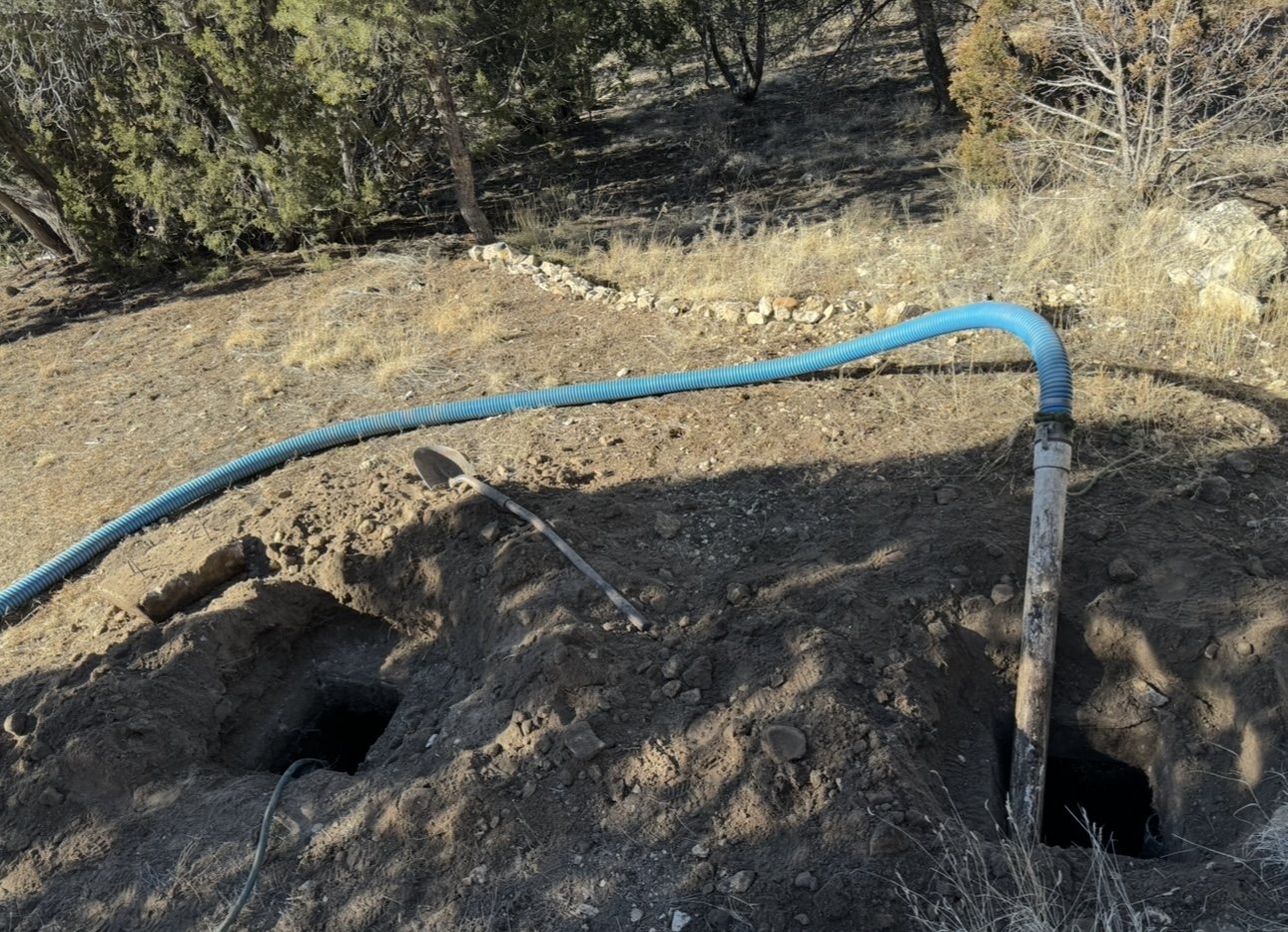
We arrive, locate the access lid, open it, and pump the tank down — liquid and the settled sludge layer both. A tank that is only skimmed off the top gets you back on the phone within a year, so the sludge is the part that matters. While the tank is open we look at the inlet and outlet baffles, the lid and riser condition, and the liquid level, because that level tells us whether the drainfield is accepting water or starting to fail.
If something looks wrong, you hear it on the spot with what we saw, not a sales pitch. Repairs go through our septic repair side, buyers who need paperwork before closing want a septic inspection, and a tank that has gone years without service needs a full septic tank cleaning rather than a pump-and-go.
Businesses run on their own clock — see commercial septic service. If the system is backing up right now, go straight to emergency septic service.
Why pumping intervals are different up here
Two things make the White Mountains its own case. First, occupancy is uneven — cabins in Pinetop-Lakeside and Heber-Overgaard may run empty for weeks and then hold twelve people over a holiday weekend. Solids settle during the quiet stretches and never get the steady bacterial activity a full-time household provides. Second, elevation and winter matter: frozen ground makes December lid digs slow and expensive, so we push maintenance pumping into spring through fall wherever we can and keep winter capacity for emergencies.
Rural parcels around Vernon, Concho and Snowflake add a third factor — distance. We batch routing in those areas, which keeps the trip charge sane if you're flexible on the day.
Signs you should not wait for the schedule
- Sewage backing up into a tub, shower or floor drain
- Every drain in the house slow at once, with gurgling toilets
- Standing water or a sulfur smell over the tank or leach field
- Grass over the drainfield greener and taller than everything around it
- An alarm on a pump tank or aerobic system
Any of those, call (928) 242-2802 rather than submitting a form. Backups get worse by the hour and cleanup costs far more than the pump.
Commercial and high-volume systems
Restaurants, RV parks, campgrounds, shops and rental complexes all run on shorter intervals than houses. We set up recurring schedules so nobody is calling us in a panic on a Saturday in July, and we keep records of tank size, location and last service so the next crew isn't starting from scratch.
Cities we pump in
- Show Low, AZ
- Pinetop-Lakeside, AZ
- Snowflake, AZ
- Taylor, AZ
- Heber-Overgaard, AZ
- Holbrook, AZ
- White Mountain Lake, AZ
- Linden, AZ
- Vernon, AZ
- Concho, AZ
- St. Johns, AZ
- Springerville, AZ
- Eagar, AZ
- Pinedale, AZ
- Clay Springs, AZ
- Whiteriver, AZ