
Septic services
Septic inspections before you buy, sell or close on a White Mountains property
Short answer: a real septic inspection means opening the tank, measuring the liquid level against the outlet, checking baffles, lid and lines, and putting the findings in writing — not walking the yard and guessing. Atteberry inspects systems for buyers, sellers and lenders throughout Show Low, Pinetop-Lakeside, Snowflake, Taylor and the surrounding communities. Call (928) 242-2802.
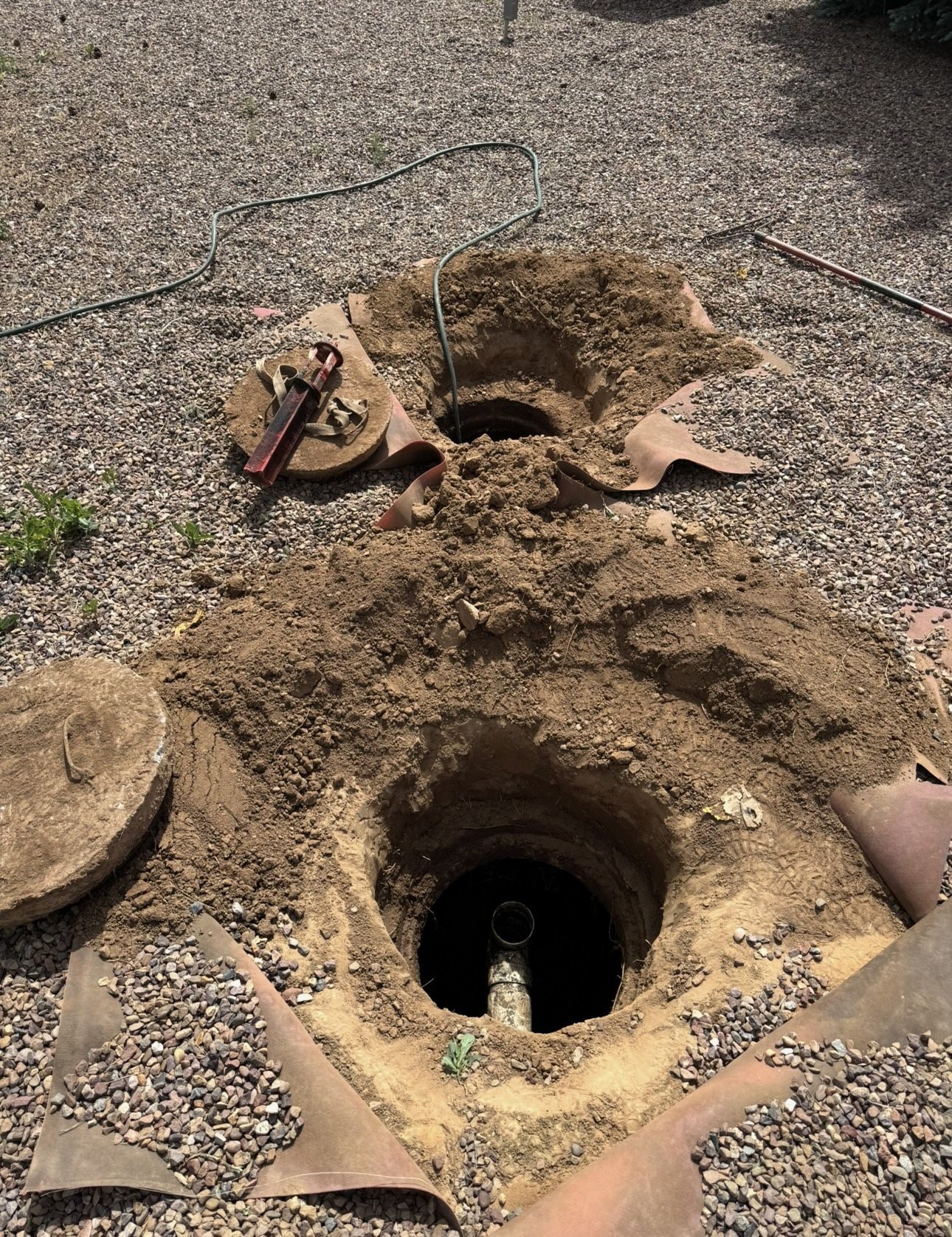
What we actually do during an inspection
We locate and uncover the access lids, pump the tank when the inspection calls for it, and look at the parts that decide whether the system has years left or months. The liquid level tells us whether effluent is leaving the tank. The baffles and tees tell us whether solids have been escaping into the drainfield. The lid, risers and inlet line tell us how the system has been treated.
We also look above ground: standing water or unusually green strips over the field, plumbing fixtures inside that drain slowly, and how close the system sits to a well or wash. On rural parcels the drainfield is often the hardest part to read, so we say plainly what we could verify and what we could not.
Buying a property with a septic system
In Navajo and Apache counties a change of ownership triggers a transfer-of-ownership inspection requirement for conventional and alternative onsite systems. Sellers are responsible for it, but buyers have the most to lose if it is done badly — a replacement drainfield is a five-figure surprise, and it lands after closing.
Book the inspection early enough that a bad result still leaves room to negotiate. Older properties anywhere in the region frequently turn out to have tanks with no risers, undersized capacity for the current household, or a field that was installed before the current lot layout existed.
What you receive
- Written findings with the condition of tank, lids, baffles and visible lines
- Liquid level reading and what it indicates about the drainfield
- Photos of anything we flag
- Clear separation between what needs fixing now and what to plan for
- A pumping record if the tank was pumped during the visit
Where we provide this service
- Show Low, AZ
- Pinetop-Lakeside, AZ
- Snowflake, AZ
- Taylor, AZ
- Heber-Overgaard, AZ
- Holbrook, AZ
- White Mountain Lake, AZ
- Linden, AZ
- Vernon, AZ
- Concho, AZ
- St. Johns, AZ
- Springerville, AZ
- Eagar, AZ
- Pinedale, AZ
- Clay Springs, AZ
- Whiteriver, AZ
Septic inspection questions
How long does a septic inspection take?
Do you locate and uncover the tank?
Is an inspection required when a property sells in Arizona?
Can you inspect a system on tribal land?
What happens if the inspection fails?
Related: septic pumping · septic repair · full FAQ