
Blog · Septic Pumping
Septic vs. sewage: how the two systems actually differ
Published February 6, 2025 · Updated September 20, 2026 · By the Atteberry Industries crew, Show Low, AZ
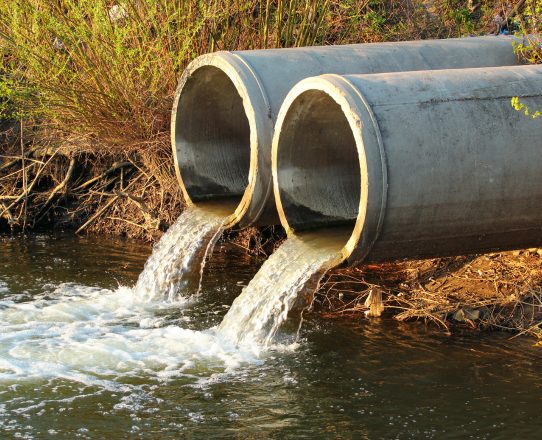
Short answer: A septic system treats and disperses wastewater on your own property in a buried tank and drainfield, while a sewage (municipal) system pipes wastewater off-site to a treatment plant. Most homes outside Show Low's city core, and nearly all of Snowflake, Taylor and the outlying communities, run on private septic rather than a city line.
How does a septic system work?
A septic system is a self-contained treatment plant sized for one property. Wastewater leaves the house and enters a buried tank, where solids settle to the bottom, grease and scum float to the top, and the relatively clear liquid in the middle flows out to a drainfield of perforated pipe buried in gravel trenches. Soil bacteria finish breaking down what's left as the water percolates through the ground.
Everything in that system depends on the tank being pumped before solids build up enough to reach the outlet and clog the drainfield. In Navajo and Apache County soils, that's typically every 3-5 years for a household tank, sooner for higher-use or undersized systems. Once a drainfield clogs with solids, there's often no fix short of replacing it.
How does a municipal sewage system work?
A sewage system collects wastewater from many properties through a shared underground pipe network and carries it, usually by gravity with pump-assist lift stations where needed, to a centralized treatment plant. The property owner isn't responsible for treatment — they pay a utility for collection and processing, and there's no tank to pump on their own lot.
Parts of Show Low and a few incorporated pockets in the region are on sewer. Most of the surrounding White Mountains — the acreage lots in Pinetop-Lakeside, the ranch parcels around Snowflake and Taylor, and the rural stretches out toward Vernon and Linden — are on private septic because running municipal line to low-density, spread-out properties isn't practical or affordable.
Which one does my property have?
Check your water bill first — a sewer utility charge means you're on municipal sewage; if it's absent, you're almost certainly on septic. You can also look outside for a green, mounded rectangle of grass (often greener than the surrounding lawn) that marks a drainfield, or a manhole-style lid a few feet from the house that marks a tank.
If you're buying a property and the listing doesn't say, ask directly, and if it's septic, ask when it was last pumped and where the tank and drainfield are located. That single question saves a lot of guessing later. Our septic pumping crews locate and mark tanks as part of every visit, so once we've been out you'll always know where to point the next contractor.
Do septic systems cost more to maintain than sewer?
Septic ownership trades a monthly sewer bill for periodic, larger maintenance costs. There's no monthly utility charge, but you're on the hook for pumping every few years (as of 2026, typical range $350-$650 depending on tank size and haul distance from your property), occasional repairs, and eventual drainfield replacement if the system is neglected.
Sewer customers pay a smaller, steady monthly fee and never think about a tank, but they also have no control over rate increases and no way to reduce the bill by using less water carefully. Neither system is inherently cheaper — septic rewards an owner who keeps up with pumping and inspections and penalizes one who doesn't.
Questions people ask us on the phone
Can a septic system be converted to sewer?
Does rain or snowmelt affect a septic system?
Is a septic tank part of the house sale disclosure?
How do I know if my tank is a septic tank or a holding tank?
Who do I call if I'm not sure which system I have?
Related reading: septic pumping · septic repair · commercial septic service · Show Low · Snowflake
Need this handled instead of read about? See Septic Pumping or call (928) 242-2802.