
Blog · Portable Toilets
Planning a porta potty rental for your White Mountains event
Published August 6, 2025 · Updated September 22, 2026 · By the Atteberry Industries crew, Show Low, AZ
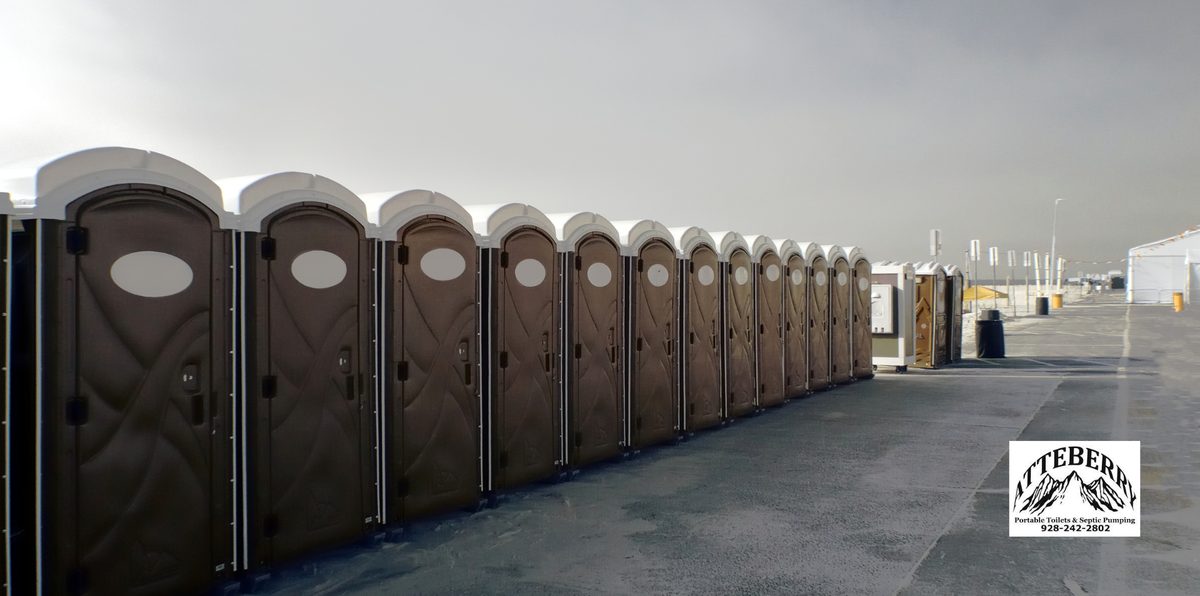
Short answer: Renting the right number and type of portable toilets for an Arizona event comes down to four things: guest or worker count, event duration, whether the public will attend (which triggers ADA requirements), and site access. As a starting point, plan roughly one standard unit per 50 guests for events under 4 hours, add a unit for every alcohol service point, and add ADA and handwashing units for any public-facing event — then adjust for elevation, terrain and forest-road access, which change delivery and placement more than most planners expect.
What types of portable toilets are available?
Most residential and job-site rentals only ever need standard units. Events, especially anything with a guest list, catering or alcohol, benefit from mixing in at least one deluxe or ADA unit even when it's not strictly required, because it changes guests' impression of the whole event far more than its cost suggests.
- Standard units — the workhorse choice for job sites and casual events, no water hookup needed
- Deluxe/flushing units — a step up with a flushing mechanism and nicer interior finish, popular for weddings
- ADA-accessible units — wider stance, ramped entry, required for any event open to the public
- Handwashing stations — freestanding sinks with foot pumps, soap and paper towels, no plumbing or power required
- Restroom trailers — multi-stall, climate-controlled units for higher-end weddings and large private events
How many units do I actually need?
Start from guest count and duration, then adjust for alcohol and gender mix. A rough planning baseline: one standard unit per 50 guests for an event under 4 hours with no alcohol; that ratio tightens to roughly one unit per 35-40 guests once a bar is running, because alcohol drives bathroom trips up sharply and concentrates them.
For weddings and receptions at cabin venues or ranch properties, add at least one ADA unit if the event is open beyond invited family, and pair a handwashing station with any food service — caterers and health-conscious guests both expect it. For rodeos, fairs and other multi-hour public events, plan in blocks: a base count for expected attendance plus a buffer for peak arrival and departure windows when lines form fast.
Construction and long-term job sites follow a different math entirely — our standard is one unit per 10 workers with weekly service, which keeps a site comfortably within OSHA 1926.51. See our construction portable toilets page for the full ratio table and service-frequency guidance.
Where should units be placed on-site?
Units need level, stable ground that our service truck can reach on delivery day and on every service visit afterward — not just a spot that looks convenient on the day of the event. At elevation around Pinetop-Lakeside and Show Low, wind is a real factor: units get staked or weighted at exposed sites, especially open fields and rodeo grounds, because a gust at 6,500 feet can tip an empty unit in a way it wouldn't at lower elevation.
Keep units within a reasonable walk of the main gathering area but far enough that odor and foot traffic don't sit right next to food service or the dance floor. For ranch and cabin weddings specifically, walk the actual placement with the venue coordinator ahead of time — long driveways, narrow forest-road bridges, and soft ground after monsoon rain have all turned a simple delivery into a same-day headache when we didn't get eyes on the route first.
How does weather and elevation change the plan?
Summer monsoon season turns unpaved ranch and forest-road access into mud with little warning, so events scheduled July through September should confirm a firm, all-weather delivery path, or accept that delivery timing may shift around a storm. Winter and shoulder-season events at higher elevations face freezing overnight temperatures, which affects both the chemical treatment in the tank and guest comfort — deluxe units with better insulation are worth the upgrade for a cold-weather event.
Wind is the most underestimated factor. Open rodeo grounds and fairgrounds around Snowflake and Taylor catch steady wind that standard placement doesn't account for; we anchor units and, where needed, adjust the layout to break the wind with trailers, fencing or other structures already on site.
What does a rental actually cost?
As of 2026, a standard unit for a weekend event typically runs $125-$225, deluxe/flushing units run $200-$400+, and ADA units add roughly $25-$75 over standard. Handwashing stations run $50-$100 for the rental period. Multi-unit event packages and job-site monthly rentals both see per-unit rates drop with volume. See our full cost breakdown for the details behind each number.
The final quote always depends on three things: distance from our yard in Show Low, how long the rental runs, and how many service visits it needs. A same-day event in Pinetop-Lakeside prices differently than a three-day rodeo weekend out past Vernon, even with the identical unit count, because drive time and service frequency are real costs, not padding.
How far ahead should I book?
Book 3-4 weeks ahead for a standard wedding or private event, and as early as possible for anything landing during peak season (late spring through early fall) or coinciding with a known regional event like a rodeo or county fair, when local availability tightens fast. Job sites should plan for delivery lead time of just a few days for standard units, but longer for ADA or specialty units that we don't keep in the largest quantity in inventory.
If your event is on a forest road, a working ranch, or anywhere without a paved, obvious approach, tell us that up front rather than after booking — it changes which truck we send and sometimes the delivery window, and we'd rather plan around it than discover it on delivery day.
Questions people ask us on the phone
How many porta potties do I need for a 150-guest wedding with a bar?
Do I need an ADA unit for a private backyard party?
What happens if a forest road is too rough for a delivery truck?
Can units be rented for just one day?
Do units need power or water on-site?
How do I know how many handwashing stations I need?
Related reading: portable toilets · event portable toilets · ADA portable toilets · handwashing station rentals · construction portable toilets · Pinetop-Lakeside · Snowflake
Need this handled instead of read about? See Portable Toilets or call (928) 242-2802.