
Blog · Septic Repair
What to check before hiring a septic repair contractor in the White Mountains
Published March 16, 2026 · Updated September 20, 2026 · By the Atteberry Industries crew, Show Low, AZ
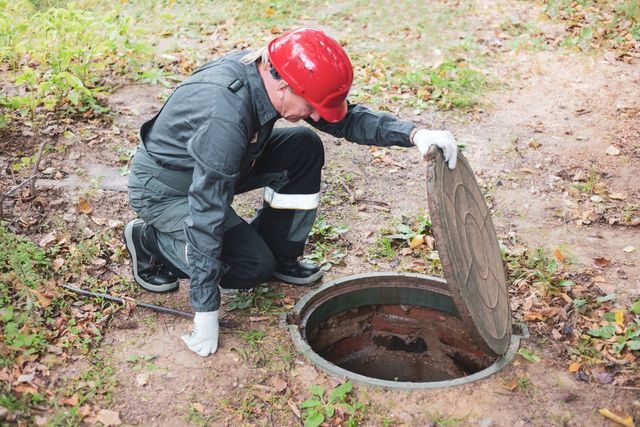
Short answer: A qualified septic repair contractor in Arizona should carry current registration to work on on-site wastewater systems, carry liability insurance, and be able to explain the specific repair your county requires before pulling a permit. Ask for that documentation up front, get a written scope, and confirm they've worked on systems in your soil and elevation — a Show Low fix isn't always the same as a Holbrook one.
What should you ask before hiring anyone to fix a septic system?
Ask what specifically failed, what the repair involves, whether a county permit is required, and for a written scope with a price range rather than a verbal number.
A contractor who can walk you through the diagnosis — baffle, line, pump, or drainfield — before quoting a fix is more trustworthy than one who quotes a flat number sight unseen. Repairs vary enormously depending on what's actually broken.
Does the repair need a Navajo or Apache County permit?
Most drainfield replacements and many tank repairs require a permit through the county health or environmental services office, and the work has to meet current setback and design standards even on an older system.
A contractor who skips the permit step to save time is leaving you exposed if the county later flags the work during a future sale or transfer inspection. Ask directly whether they'll pull the permit and be named on it.
Why does local experience matter more than it sounds like it would?
Soil type, elevation and access change what a repair actually requires — a drainfield repair on clay-heavy ground near Snowflake behaves differently than one on the rockier ground around Pinetop-Lakeside, and both differ from desert-floor conditions near Holbrook.
A contractor working outside their usual territory may not know local percolation quirks or where frost depth typically sits in a given winter, both of which affect how a repair is engineered.
How do long driveways and winter access affect scheduling and cost?
Long dirt driveways, locked gates and properties that go from Show Low to Vernon or Concho add drive time and sometimes require smaller equipment to reach the tank, which a contractor should account for in their quote, not add as a surprise fee later.
From December through March, snow and frozen ground at 6,000–7,000 feet can delay excavation-based repairs; ask how the contractor handles winter scheduling before you're stuck waiting on a failed system in freezing weather.
What's a reasonable range for a septic repair, and why is it hard to quote in advance?
As of 2026, typical range for a straightforward baffle or lid repair runs in the low hundreds, while a full drainfield replacement can run into the five figures depending on soil and permitting.
The spread is wide because the actual failure point drives the cost far more than the property's location does. Any contractor promising an exact number before inspecting the site is guessing.
How we diagnose a repair before we ever quote one
We start with a visual and camera inspection to find the actual failure point — a cracked baffle, a collapsed line, root intrusion, or a drainfield that's saturated and no longer absorbing water — before talking about cost. Skipping this step and jumping straight to a number is how homeowners end up paying for the wrong fix.
For drainfield concerns specifically, we'll often dig a small inspection pit or use a probe to check how the soil is actually behaving, since a system can look fine at the surface while the gravel underneath is fully clogged with biomat.
What to have ready before the contractor arrives
Pull together any records you have — the original permit, past pumping receipts, or a tank locate diagram — since that history speeds up diagnosis considerably. If the property was recently purchased, share the pre-purchase inspection report if one exists.
- Original septic permit or county records, if available
- Past pumping and service receipts
- A tank locate diagram or marked lid location
- Any recent pre-purchase or transfer inspection report
Questions people ask us on the phone
What credentials should a septic repair contractor in Arizona have?
Should I get more than one quote for a septic repair?
Can I do a septic repair myself to save money?
How fast can a repair happen if my system is actively backing up?
What red flags suggest a contractor isn't a good fit for a rural repair?
Should the contractor provide a warranty on the repair?
Related reading: septic repair · emergency septic service · septic inspections
Need this handled instead of read about? See Septic Repair or call (928) 242-2802.